
© creative synergies, Laurent Bailly
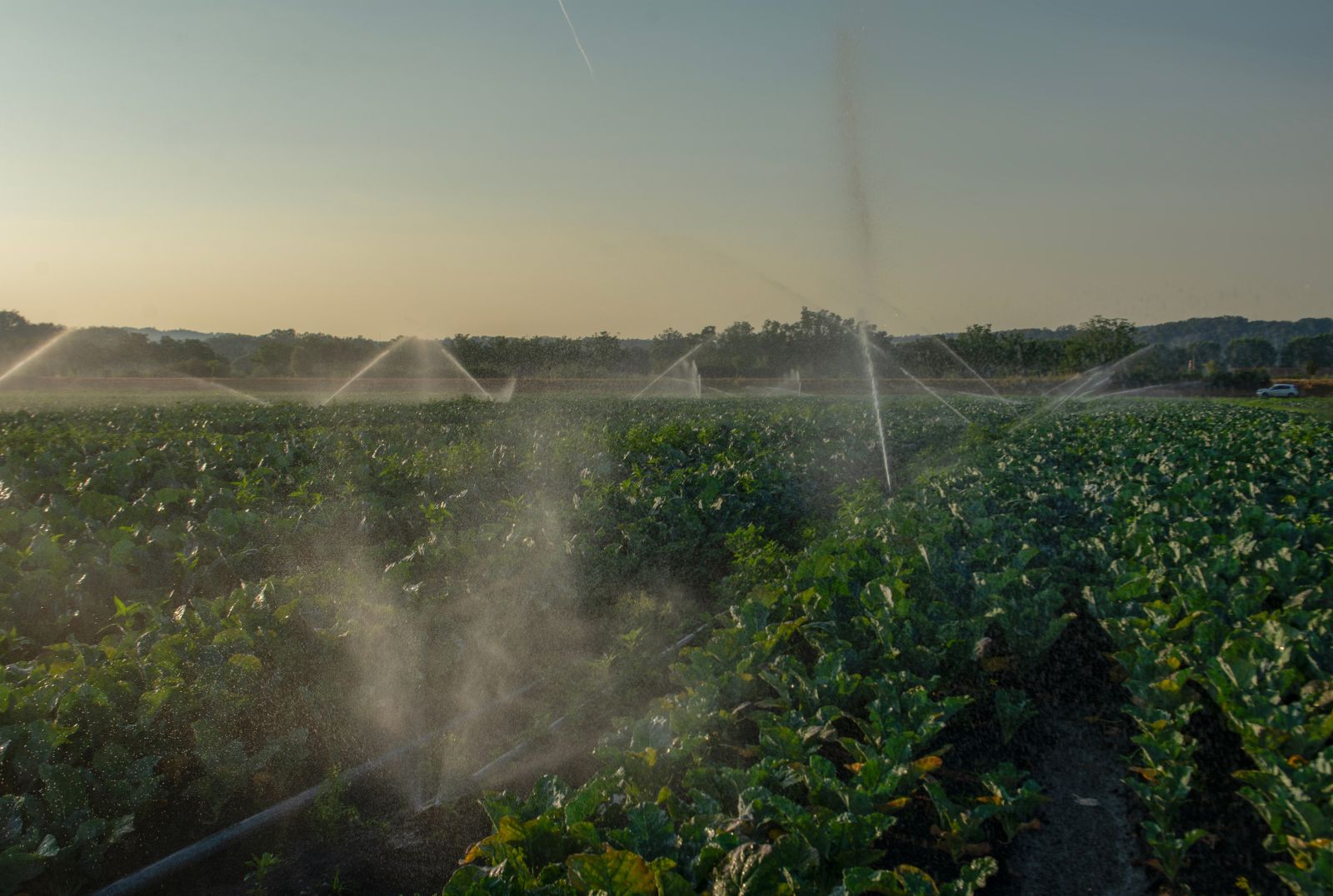
With temperatures soaring well above 30°C and no rain, watering has become a constant task. "It's a race against time: the pump is running day and night," Monia explained during the heatwave. Irrigation is all the more crucial at this time of year, as it's not just about tending to the crops already planted: since June, we've also been planting storage vegetables, whose young seedlings cannot tolerate any lack of water.
Mediterranean expertise
Monia was trained in regions where water constraints are structural. A graduate engineer in Tunisia, she specialized in southern Italy, earning a master's degree in irrigation science from the International Centre for Advanced Mediterranean Agronomic Studies (CIHEAM) in Bari, followed by a doctorate in agronomy. After a distinguished academic career with numerous publications and seven years of experience working for a vegetable farm in France, she joined Stoll Frères two years ago.
Adapt the intake to each culture
Irrigation techniques vary depending on the vegetable and its stage of development. For long-term crops, such as squash and zucchini, drip irrigation is preferred. This system is expensive to install. However, by targeting only the plant, it allows for significant water savings and limits fungal disease attacks.
For most other crops, sprinkler irrigation remains the standard method in Switzerland. More flexible, it covers large areas, but requires close attention. Timing is crucial: broccoli and cauliflower, for example, cannot tolerate watering in full sun once the flower head has formed. Conversely, young plants thrive when watered during the day.
The challenge of young plants
Despite the heat and drought, the cabbages and leeks, which cover about thirty hectares, had to be planted. In this situation, "we plant a little each day to keep up with the watering," explains Monia. During the first few days, the soil must remain constantly moist to allow the plants to establish themselves. This means frequent watering (two to three times a day) in small quantities. Once the root system is developed, the strategy changes: waterings are spaced out while the volume is increased, forcing the roots to grow deeper in search of water.
A rigorous organization
Managing irrigation requires careful coordination with other fieldwork. Monia creates schedules taking into account harvests, weeding, and treatments. "For example, you have to wait for the soil to dry after weeding to prevent certain weeds from growing back," she explains.
Faced with the surge in activity during this period, Monia reinforced the teams and reorganized the work with adjusted schedules to ensure watering morning and evening, as well as the installation of irrigation lines on the new plots. For their part, the tractor drivers also adapted their pace, starting planting as early as 3 a.m.
Local and technological advantages
Our farm is fortunate to have a favorable geographical location, as it is crossed by the Thièle River, from which we pump the water needed for our fields. To optimize its use, we use tensiometer probes that help Monia monitor soil moisture plot by plot in real time.
While temperatures have returned to seasonal levels, irrigation continues with the same care, but at a more moderate pace. Thanks to the work of the past few weeks, our crops have weathered this heatwave, allowing us to anticipate bountiful vegetable harvests for our customers in the weeks and months ahead.