
© creative synergies, Laurent Bailly
From fields to refrigerators
From late October to late November, our teams harvested continuously, with tractors, crates, and bales constantly moving about. Carrots first, then cabbages, celery, turnips, and radicchio: almost all storage produce had to be brought in before the first frosts. Only a few varieties of vegetables remained in the ground, able to withstand the cold as long as the temperature didn't drop too low.
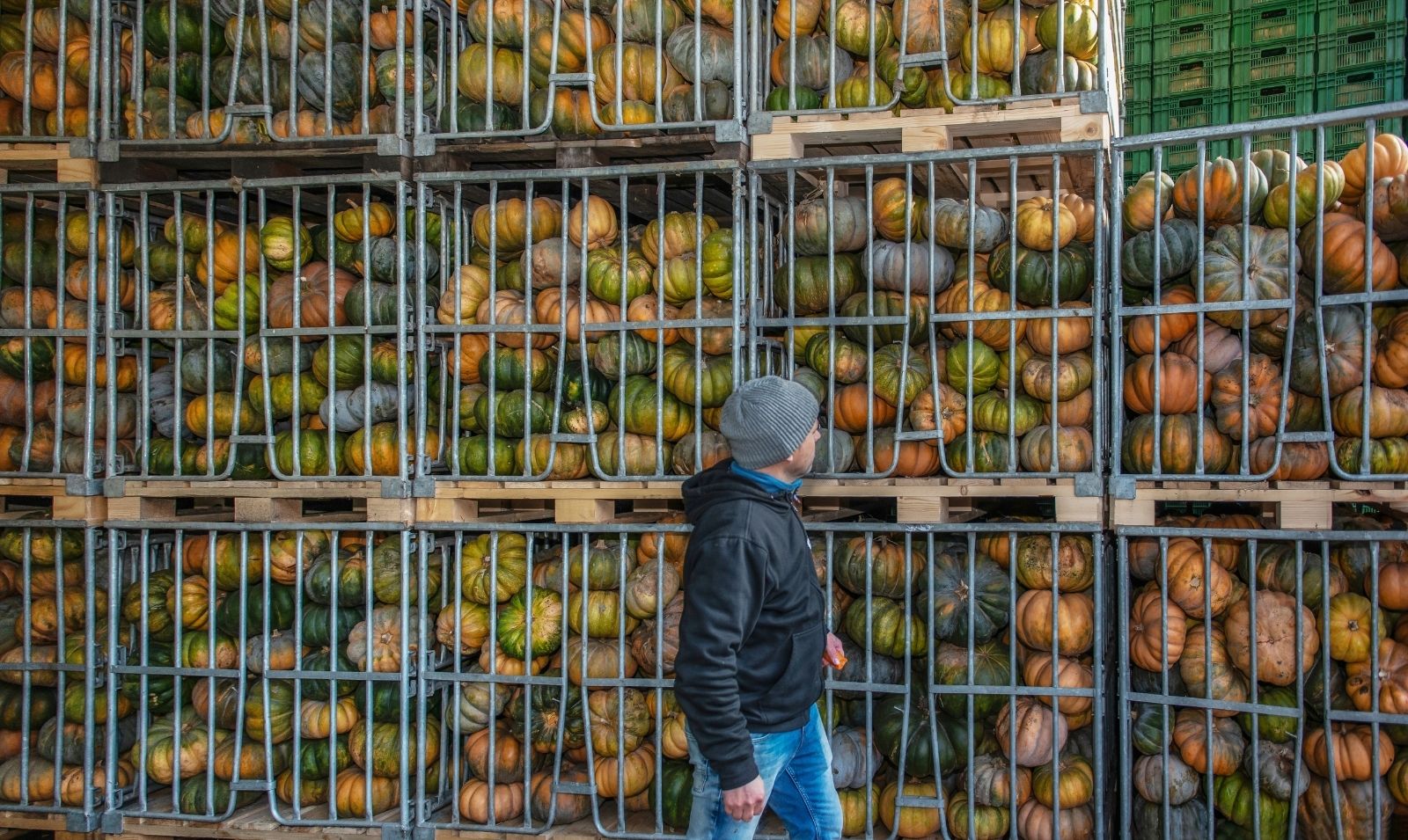
Meanwhile, the teams at the Yverdon and Montagny depots worked at an equally rapid pace. Each shipment from the fields was received, labeled, and stored, in an organization perfectly timed to the rhythm of the harvests.
Mastering the cold for optimal preservation
Preserving vegetables is a matter of precision: each product requires specific conditions. Salads, for example, are stored at +1.5°C and regularly moistened to keep them fresh and crisp. Tomatoes, on the other hand, have their quality and flavor preserved in dry refrigerators at +12°C.
The conditions are quite different for winter vegetables. "Carrots need cold, damp conditions, otherwise they quickly lose their firmness," explains Artur Da Cruz. Stored covered with soil in wooden crates lined with plastic bags, they rest at -0.5°C / +0.5°C. They are only washed and packaged when they are taken out of storage.
Celery and turnips follow the same principle, while cabbages and radicchio require a drier, more airy environment, stored in light layers to avoid damaging the leaves. This is a whole area of expertise that the teams have acquired, allowing them to preserve the produce for a long time without using gas.
Clearly labeled crates for guaranteed traceability
The first vegetables put into storage must be the first to go. That's why nothing is left to chance. Each crate has a label indicating the date, serial number, and batch number. This tracking also guarantees complete product traceability: an essential aspect, even though return rates are virtually zero.
Experience in action and as a team
Artur Da Cruz arrived from Portugal for a seasonal position in 1998 and has grown with the company. Storage techniques hold no secrets for him. Every autumn, however, brings the same challenge: finding enough space to store everything. But, he calmly summarizes, "you have to be well-organized from the start, and then everything runs smoothly.".
Throughout the winter, the warehouse teams gradually remove vegetables from storage, while monitoring each refrigerator. This rigorous monitoring extends the work done at each stage – from variety selection to cultivation and harvesting – ensuring that the vegetables are preserved until spring, without losing either taste or freshness.